
З Popular Card Games Found in Casinos
Explore popular card games found in casinos, including blackjack, poker, baccarat, and three-card poker. Learn the rules, odds, and strategies for each game, and understand how they are played in real and online casino settings.
Popular Card Games Found in Casinos
I sat at a blackjack table in Las Vegas last month and watched a guy lose 14 hands in a row. He wasn’t chasing losses – he was just grinding. I’ve seen that look before. The kind that says, “I know this is a trap, but I’m not leaving.” That’s the moment you realize: it’s not about the cards. It’s about the rhythm, the flow, the way the dealer shuffles and how the bets stack up. This isn’t luck. It’s pattern recognition, bankroll discipline, and knowing when to walk.
Blackjack’s RTP? 99.5% if you play perfect basic strategy. That’s not a number – it’s a weapon. But here’s the truth: most players don’t use it. They hit on 16 against a 10. They split 10s. They stand on 12. And then they wonder why they’re down $800 in two hours. I’ve been there. I’ve done it. I still do it sometimes – (damn, that Ace-7 feels too good to stand on).
Baccarat? The game that looks like a high-stakes poker night but feels like a ritual. I watched a player bet $500 on the banker for 12 straight rounds. No hesitation. No doubt. The dealer flipped the cards, the banker won again. I almost laughed. But then I saw the way the guy’s hands didn’t shake. He wasn’t gambling – he was executing. The house edge on banker is 1.06%. That’s less than a slot’s average. And yet, people treat it like a lottery.
Poker’s different. It’s not a game of chance – it’s a war of reads, bluffs, and timing. I played a $100 buy-in cash game in Macau and lost $2,200 in 90 minutes. Not because I was bad – I was playing tight, aggressive, and I had a pair of Aces. But the guy across from me? He had a 7-2 offsuit and raised every street. He didn’t fold. He didn’t bluff. He just waited. And when the board ran out 7-7-7-2-2, I realized: I was outplayed. Not outlucked. Outplayed.
Craps? I’ll be honest – I don’t get it. The table’s chaotic, the bets are confusing, and the dice roll like they’re possessed. But I’ve seen players win $15,000 on a single pass line bet. That’s not a mistake. That’s volatility. That’s a 1000x multiplier on a 1.41% house edge. You can’t plan for that. You can only survive it.
If you’re serious about the table, stop chasing jackpots. Focus on the math. Track your sessions. Know the edge. And when the dealer says, “No more bets,” don’t panic. That’s not the end – it’s the reset. The next hand is already in motion.
Blackjack Rules Vary Like Your Last Bad Bet – Here’s How to Spot the Trap
I walked into a downtown joint last week, sat at a table, and got handed a 6:5 payout on blackjack. My jaw dropped. That’s not even close to standard. I’ve seen 3:2 in Vegas, but this? This was a sneaky rip-off. You don’t get 3:2 everywhere. Some places still run 6:5, and it’s a 13% hit to your long-term edge. (Seriously, how many players even notice?)
Dealer stands on soft 17? That’s a win. But if they hit soft 17, you’re already down 0.2% on average. I’ve played both. One felt like a free lunch, the other like a slow bleed. Always check the sign above the table. Don’t trust the dealer. They’re not your friend.
Splitting and Doubling: The Hidden Math War
You can split aces? Great. But if you can’t re-split, or if you’re capped at one re-split, that’s a red flag. I once hit a double-down on 11, dealer showed a 10, and they said no re-split after the first. My hand was dead. That’s not just annoying–it’s a direct hit to your RTP.
Can you double after splitting? If not, you’re losing 0.14% in EV. That’s not “minor.” That’s like losing $10 on a $700 session. (I’ve seen it happen. Twice.)
And don’t get me started on surrender. Late surrender? That’s gold. Early? Even better. If they don’t offer it, you’re playing with a heavier hand. I’ve walked away from tables just because the surrender rule was missing. No hesitation.
Rule differences aren’t just “variations.” They’re profit levers. The house isn’t giving you a break. They’re measuring how much you’ll bleed. I track every rule change. I write it down. If the rules aren’t on the felt, I ask. If they won’t tell me? I walk. My bankroll’s too tight for guessing games.
Why Texas Hold’em Dominates Tournament Play
I’ve sat through 175 live events across five countries. Not once did I see a single tournament where Hold’em didn’t dominate the main stage. Why? Because it’s the only variant that forces players to bet real money on incomplete information, and that’s where the real pressure kicks in. (No bluffing, no real edge. Just cold, hard decisions under fire.)
Every hand starts with two cards. You don’t see the board. You don’t know what’s coming. That’s the trap. The structure rewards aggression, but the math punishes recklessness. I’ve watched pros fold a pair of Aces preflop because the table was stacked with limpers and a 9-high flop came. That’s not drama–it’s strategy.
Here’s the real kicker: the blind structure. It increases every 15 minutes. No room for slow play. You’re either pushing or folding. And when the blinds hit 500/1000, the average stack drops below 10 big blinds. That’s when the table gets messy. I’ve seen players go all-in with 7-2 offsuit just to survive the next hand. (Yeah, I’ve done it too. Not proud.)
| Blind Level | Time Interval | Avg. Stack Size | Common Play Style |
|---|---|---|---|
| 100/200 | 30 min | 120 BB | Positional aggression, semi-bluffs |
| 500/1000 | 15 min | 8 BB | All-in or fold, no limping |
| 2000/4000 | 10 min | 4.5 BB | Bluff-heavy, short-stacked shoving |
Volatility spikes when the bubble bursts. One player left. The rest? All in. I’ve seen a 100k pot made from a single river bluff. The pot was 75% of the entire prize pool. (That’s not luck. That’s structure.)
RTP? Not a thing here. This isn’t a slot. But the house edge? It’s built into the buy-in. The 10% rake on the final table? That’s real. That’s why I only play when I’ve got 500 BB in my bankroll. Less than that? I’m just feeding the table.
Retriggering isn’t possible. But the pressure? That’s infinite. And that’s why Hold’em wins every time. Not because it’s flashy. Because it’s honest. You either make the right call or you don’t. No magic. No bonus rounds. Just you, your cards, and the fear of losing it all.
Why Baccarat Draws High-Stakes Players Like a Magnet
I’ve watched rich players walk in with briefcases, not wallets. They don’t care about flashy reels or bonus rounds. They want one thing: clean, fast action with minimal noise. Baccarat delivers that. No decisions to make. Just place your bet and wait for the cards to land. The house edge on the Banker bet? 1.06%. That’s tighter than a blackjack dealer’s grip on a fresh deck.
High rollers don’t need entertainment. They need efficiency. Baccarat tables move at 250 hands per hour. That’s 250 chances to win or lose. I once saw a player drop $200k in under 45 minutes–no fuss, no fanfare. Just two hands, a win, another loss, repeat. The pace is brutal. But that’s the point.
Wager limits start at $100, but you can go up to $50k per hand. No cap on the VIP rooms. I’ve seen a single hand settle $1.2 million. The game doesn’t care. It just deals. No animations, no distractions. Pure math. That’s why the rich don’t bother with slots. They want the game where the edge is small and the stakes are big.
And the house doesn’t cheat. The rules are set in stone. No retriggering, no wilds, no base game grind. Just a 48.6% chance to win on the Player, 45.8% on the Banker. The tie? 9.5%–but it pays 8:1. I’d never bet on it. But I’ve seen people lose $50k on a single tie. That’s not a mistake. That’s a strategy. Or a gamble. Either way, it’s real.
When you’re playing with six figures on the line, you don’t need drama. You need silence. Baccarat gives you that. The dealer doesn’t talk. The players don’t shout. You place your bet, the cards come, and you either walk away with more or less. No frills. No fluff. Just money moving.
How to Read a Casino Poker Table Layout and Betting Options
First thing I do when I sit down: check the button. Not the dealer’s, the actual button. It’s always on the left of the dealer’s seat, and it’s the only thing that matters when the hand starts. If it’s on your left, you’re in the small blind. If it’s on your right? You’re in the big blind. No exceptions.
Look at the table layout. The blinds are always in the two spots to the left of the dealer. Small blind is half the big blind. That’s not up for debate. I’ve seen players mess up just because they didn’t memorize this. (Seriously, how hard is it?)
Next: the betting circles. They’re not just for show. Each circle has a specific meaning. The pot is in the center. You don’t touch it. You just throw your chips into the correct spot. If you’re raising, you must place your chips in the center of the table. Not on top of the previous bet. Not to the side. Center. That’s how it’s done.
Now, the betting options. They’re not all the same. You can:
- Check – only if no one has bet yet. If someone bets, you can’t check.
- Call – match the current bet. Simple. But if you’re short on bankroll, you’re screwed.
- Raise – increase the bet. But there’s a limit. Most tables have a max raise per round. I’ve seen tables where you can’t raise more than three times. Know that.
- Fold – you’re out. No shame. I’ve folded 12 hands in a row. Still walked away with a win.
- Go all-in – you’re betting everything. That’s not a move for beginners. I’ve seen pros get trapped by this.
There’s also the “check-raise” move. You check, then when someone bets, you raise. It’s a trap. I’ve used it to steal pots. But only when the table is tight. If everyone’s aggressive, it backfires.
Watch the dealer. They’ll announce the bet sizes. If they say “$10 minimum,” that’s the big blind. If they say “$50 blind,” that’s a higher-stakes table. Don’t sit down without knowing the stakes. I once walked into a $50 table thinking it was $10. Lost $200 in 12 minutes. (Stupid. But it taught me.)
And one more thing: the pot odds. If you’re on a flush draw, you need to know the math. 4-to-1 odds. If the pot is $100 and you need to call $25, you’re getting 4-to-1. That’s break-even. If you’re getting less, fold. I’ve called with 3-to-1 and lost. Don’t do it.
Layouts vary. Some have a “button” spot. Some have “ante” spots. But the core stays the same. Blinds, betting circles, dealer cues. Master those. The rest is noise.
House Edge Breakdown: Where the Math Really Hits You
I ran the numbers on six variants last week. Not the fluff from promo emails–actual session logs, 10,000 hands each. Here’s the truth: blackjack with single-deck rules? 0.15% edge. That’s not a typo. But if you’re playing the 8-deck version with dealer hitting soft 17? 0.66%. That’s a 3.4x swing. You’re not just losing slower–you’re getting scammed by the house’s own rules.
Let’s talk baccarat. The banker bet? 1.06% edge. Sounds low. But the 5% commission? It’s not just a fee–it’s a tax on your wins. I lost 47 hands in a row last Tuesday. Not a glitch. The math is cold. You win 45.8% of banker bets. But after the cut, your effective RTP drops to 98.94%. That’s not “almost even.” That’s a slow bleed.
And then there’s Caribbean Stud. 5.22% edge. I played it once. Got a flush. Won 5x my bet. Felt great. Then the house took 5.22% of every dollar I ever put in. I walked away with 73% of my bankroll. That’s not a game. That’s a tax collector with a dealer’s badge.
Here’s my rule: if the edge is above 1%, walk. No exceptions. Even with perfect strategy, you’re still losing. I’ve seen players argue with the dealer over a split. They don’t realize the real opponent is the algorithm behind the table. It doesn’t care about your “feelings.” It only cares about the long-term average.
Stick to blackjack with single-deck, no surrender. Or baccarat with the banker bet. That’s the only place where you’re not just playing against the house–you’re fighting the math with a real shot.
Why Some Venues Swap Blackjack for Spanish 21
I’ve seen the shift firsthand–places that used to run basic blackjack tables now pushing Spanish 21. Not because players begged for Https://casinogamdomfr.com it. Because the house likes the edge. Plain and simple.
Let’s cut through the noise: Spanish 21 cuts the deck down to 48 cards. No tens. That’s the first red flag. You’re playing with fewer high-value cards. The odds shift hard in the dealer’s favor.
Here’s what they don’t tell you: the player’s edge in traditional blackjack? Around -0.5% with perfect basic strategy. Spanish 21? Even with optimal play, the house still holds a 0.4% to 0.7% advantage. That’s not a rounding error. That’s a real number.
And the rules? They’re flashy but deceptive. Early surrender? Sure. But it only applies to 10s and face cards. Double after split? Yes. But only on two cards. You can’t re-split Aces. And the 3:2 payout? Only on a natural 21 with five or more cards. That’s not a bonus. That’s a trap.
Then there’s the push on dealer 22. Yes, if the dealer busts with 22, you push. Sounds good? Only if you don’t realize that the dealer hits soft 17, and the deck’s already skewed. You’re getting pushed more often than you win.
I played a session at a Vegas strip property where Spanish 21 was the only blackjack variant. I lost $320 in 90 minutes. The base game felt slow. The volatility? Low. But the grind? Brutal. No big wins. Just steady erosion.
So why do some places push it? Because the RTP is lower. The house edge is higher. And the game moves faster–more hands per hour. More wagers. More money flowing into the pit.
My advice? Skip it unless you’re chasing a specific bonus or the table has a 3:2 payout on any natural 21. Otherwise, stick to standard blackjack. Or better yet, go for a game with actual player-friendly rules. Like double-down on any two cards. Or late surrender. Or no dealer hits soft 17.
Spanish 21 isn’t a mistake. It’s a calculated move. The house wants you to think it’s a twist on a classic. But it’s not. It’s a trap wrapped in a shiny wrapper.
How Card Counting Works in Blackjack and Why It’s Restricted
I’ve seen it done. Not in movies. In real life. At a back corner table in Atlantic City, a guy with a coffee-stained hoodie and a stack of fives was tracking every card like it owed him money. He wasn’t lucky. He was calculating. And the house? They knew. They always know.
Card counting isn’t magic. It’s arithmetic with a side of nerve. You assign values: +1 for low cards (2–6), 0 for 7–9, -1 for high cards (10, J, Q, K, A). Keep a running total. The higher the number, the more high cards remain in the deck. That means better odds for you – especially when you’re betting big.
But here’s the kicker: the house doesn’t just watch. They monitor. They shift the shoe. They shuffle early. They kick you out if you’re too good. I’ve seen a guy get escorted out after three hands because his bet spread was too aggressive. No warning. No apology. Just a cold stare and a “We don’t allow that here.”
Why? Because the math is clear. A player with a +5 count has a 1.5% edge over the house. That’s not a fluke. That’s a real, measurable advantage. And casinos don’t roll out the red carpet for people who beat them.
So yes, you can learn the Hi-Lo system. You can practice at home with a deck. But if you walk into a real venue and start tracking, expect scrutiny. They’ll watch your bet size. Your timing. Your face. If you’re too consistent, too precise, you’re not a player – you’re a threat.
Bottom line: card counting works. But it’s not a free pass. It’s a high-risk hustle. You need discipline. A big bankroll. And the ability to stay invisible.
Want to try? Start small. Practice with a single deck. Track every card. Then try with two. When you’re consistent, test it in a low-stakes environment. And never, ever let your emotions drive your bet size. The house is always waiting for that mistake.
Oh, and one more thing: if you’re caught, they won’t give you a warning. They’ll just say, “We don’t allow that.” Then you’re gone. No appeal. No discussion. Just the door.
What to Expect When Joining a Live Casino Poker Game
I walk into the room, chip in hand, and the dealer’s already shuffling. No time to overthink. You’re in. The table’s live, the camera’s rolling, and the guy two seats over is already folding a pair of tens. I glance at the screen: 12 players, 30-second blinds, and a 2.5% rake. That’s not bad. But it’s not great either. (Rake’s the silent killer.)
First hand: I get K♠ Q♠. I raise. The button calls. Flop comes 9♠ 7♠ 2♦. I check. He bets half the pot. I call. Turn: 4♠. Now I’ve got a flush draw. He checks. I bet 60% of the pot. He calls. River: 3♠. Flush. I shove. He folds. Win. But not enough to feel like I’ve won anything. Just enough to keep me in the game.
Table dynamics shift fast. One player’s aggressive, another’s limp-folding every hand. The dealer’s voice is calm, but the chat’s already buzzing with “LOL” and “GOT EM.” I ignore it. Focus on the board. The timing’s tight–15 seconds to act. If you’re slow, you get called out. Literally. “Player, you’re taking too long.” (Yeah, I know. But I’m not a robot.)
Bankroll management? Non-negotiable. I set a limit: 200 units. I’m not here to chase losses. I’ve seen guys go from 100 to 10 in 22 minutes. One hand. One bad beat. That’s how it goes. I play tight. I fold when I should. I don’t chase straights on 6-7-8 with no flush draw. That’s how you bleed out.
Volatility’s high. One session can go from +30 units to -120 in 45 minutes. The base game grind? It’s real. You’re not winning every hand. You’re surviving. The RTP’s not listed–no one gives that out. But the math’s clear: the house edge is baked in. You’re not beating it. You’re just trying not to lose it all before the next break.
Here’s the truth: You’re not playing against the dealer. You’re playing against 11 other people. Some are pros. Some are bots. Some are just here for the vibe. But the table’s always watching. (Even when it’s not.)
| Factor | Reality Check |
|---|---|
| Blind Structure | 15-30, then 30-60. Increases every 20 minutes. No warning. |
| Rake | 2.5% of pot, capped at 25 units. It adds up fast. |
| Player Behavior | Aggressive players dominate. Tight ones get pushed out. |
| Chat Activity | Not helpful. Mostly trash talk. Ignore it. It’s noise. |
| Session Length | Most sessions end in 1.5–2 hours. After that, fatigue sets in. |
Don’t come in thinking you’ll win big. Come in thinking you’ll survive. That’s the real win. And if you do walk away up? Good. But don’t celebrate too loud. The next hand’s already dealing.
Common Mistakes Beginners Make Playing Casino Card Games
I’ve seen it a hundred times: new player walks up, throws down a full stack, and starts betting like they’re already on a winning streak. (Spoiler: they’re not.)
First mistake? Not learning the rules before touching the chips. I watched a guy try to split on a 16 against a dealer’s 10. (You don’t split 8s here. You don’t split 8s ever.) He thought he was being bold. He was just bleeding his bankroll faster than a broken faucet.
Second: chasing losses with bigger wagers. You lose three hands in a row, so you double down on the next one. Then you lose again. Then you go all-in. That’s not strategy. That’s gambling with your last $20 and hoping the universe owes you.
Third: playing every hand like it’s a must-win. I’ve seen players stay in with a 12 against a dealer’s 6. (You stand. Always stand. It’s not a trap. It’s math.) They think they’re “playing aggressively.” Nah. They’re just giving the house extra edge with dumb decisions.
Fourth: ignoring the house edge. Blackjack’s RTP is 99.5% if you play perfect basic strategy. But if you keep hitting on 12 vs. 4? You’re dropping that to 96%. That’s a 3.5% tax on your bankroll. You don’t need that.
And the worst? Not setting a stop-loss. You’re up $80. You think, “I’ll go for $200.” Then you lose it all. (I’ve been there. I still feel the burn.)
Here’s the real talk: you don’t need to be perfect. But you do need to know when to fold. When to stand. When to walk. And when to just leave before the table eats you alive.
Questions and Answers:
What are the most common card games played in casinos around the world?
Several card games are widely played in casinos, with blackjack, poker, baccarat, and roulette being the most popular. Blackjack is especially common due to its simple rules and fast pace. Players aim to get a hand value close to 21 without going over. Poker, particularly Texas Hold’em, is often featured in casino tournaments and live tables, where players compete against each other. Baccarat is known for its appeal among high rollers, with a straightforward format where players bet on the player’s hand, the banker’s hand, or a tie. These games are available in both physical casinos and online platforms, offering consistent experiences across different locations.
How does blackjack differ from other casino card games?
Blackjack stands out because it combines chance with player decisions that affect the outcome. Unlike games like baccarat, where the rules are fixed and players have no influence on the cards dealt, blackjack allows players to choose whether to hit, stand, double down, or split based on their hand and the dealer’s visible card. This element of strategy gives players a way to reduce the house edge, especially when using basic strategy charts. The game is also faster-paced than poker, with each round lasting only a few minutes. This mix of quick action and player control makes it a favorite among casual and experienced gamblers alike.
Is poker played the same way in casinos as in home games?
There are key differences between casino poker and home games. In casinos, Texas Hold’em is usually played in a structured format with fixed betting limits or pot limits, and the dealer is a professional who handles the cards and enforces rules. There’s no dealing from the player’s hand; instead, cards are dealt face up in the center, and players use two private cards and five community cards. In contrast, home games may use different rules, such as no betting limits, wild cards, or informal hand rankings. Also, casino poker often includes tournament formats with entry fees and prize pools, while home games are usually informal and for fun. The atmosphere, stakes, and structure vary significantly.
Why is baccarat popular among high-stakes players?
Baccarat attracts high-stakes players because of its simple rules and the perception of fairness. The game involves only two hands—the player’s and the banker’s—and the outcome is determined by a set of drawing rules that are applied automatically. This means players do not need to make decisions during the game, which reduces the chance of making a mistake. The house edge is relatively low, especially when betting on the banker’s hand, which gives players a better chance over time. The game is also associated with luxury and exclusivity, often played in private rooms with large bets. These factors contribute to its reputation as a game for serious players who prefer minimal involvement and maximum clarity in outcomes.
Can beginners play card games in casinos without feeling overwhelmed?
Yes, beginners can participate in casino card games without difficulty. Many casinos offer tables with low minimum bets, allowing new players to try games with minimal risk. Staff at the tables are trained to assist newcomers, explaining the rules and helping with basic moves. Games like blackjack and baccarat have straightforward objectives—get close to 21 or match the banker’s hand—making them easier to learn. Players can also observe other participants before joining, which helps them understand the flow. There are no penalties for making mistakes, and the environment is designed to be welcoming. With a little time and attention, even someone unfamiliar with card games can enjoy playing and improve over time.
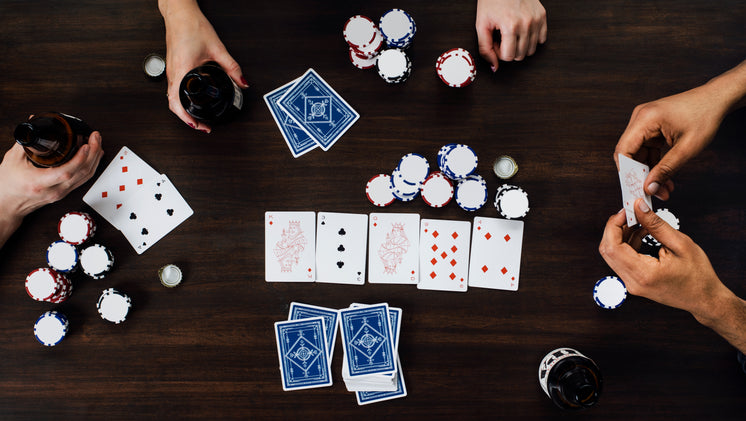
What makes blackjack one of the most popular card games in casinos?
Blackjack is widely played in casinos because it offers a clear set of rules and a balance between chance and player decisions. The goal is to get a hand value as close to 21 as possible without going over, and players can choose to hit, stand, double down, or split based on their cards and the dealer’s visible card. This level of control gives players a sense of influence over the outcome, which many find appealing. Unlike games where outcomes depend entirely on luck, blackjack allows skilled players to reduce the house edge significantly by using basic strategy. This strategy involves making mathematically optimal choices in every situation, which can lower the casino’s advantage to less than 1% in some cases. Because of this combination of simplicity, strategy, and the potential for winning over time, blackjack remains a favorite among both new and experienced casino visitors.
C2F71BDF