

A general ledger is the master set of accounts that summarize all transactions occurring within an entity. There may be a subsidiary set of ledgers that summarize into the general Cash Disbursement Journal ledger. After the ledger entries, the balances of all the ledger accounts are taken to the trial balance sheet.
- The credit sales figure of $200,000 would go into the accounts receivable control account.
- In the past, the general ledger was literally a ledger—a large book where financial data was recorded by hand.
- This equation is reflected in the balance sheet, which details individual accounts.
- Companies use a general ledger reconciliation process to find and correct such errors in accounting records.
- This structure is defined by your Chart of Accounts, which is like the table of contents for your ledger.
- The journal entry will debit goods as an asset and credit cash as it will be going out or reducing to purchase the goods.
How to Use the General Ledger
The account details can then be posted to the cash subsidiary ledger for management to analyze before it gets posted to the general ledger for reporting purposes. When you assign a code to each type of transaction, searching your ledger becomes much easier. For instance, when doing their own books, many business owners assign revenue sub-ledgers numbers starting at 100 and expense sub-ledgers codes starting at 200. If there’s an error and your books are out of balance, you’ll need to go back to make changes and create an adjusted trial balance or adjusting entries.
- GL contains all debit and credit entries of transactions, and entry for the same is done.
- Operating income includes sales revenue, income received as fees and commission, etc., and these incomes will depend on the type of business you undertake.
- Revenue accounts in the general ledger are typically divided into categories, such as sales and interest.
- General ledger accounts are the same accounts as those found on a chart of accounts.
- As per bookkeeping rules, every financial transaction affects two accounts, causing them to either gain or lose something with equal amounts.
- If you’re recording a large number of transactions every month, keeping your ledger organized can get tricky.
General Ledger Account Numbering
For example, if your company has $25,000 in cash, $50,000 in inventory and $100,000 in equipment, your total assets are $175,000. We have financial relationships with some companies we cover, earning commissions when readers purchase from our partners or share information about their needs. Our editorial team independently evaluates and recommends products and services based on their research and expertise. And by understanding the purpose of a balance sheet in the accounting equation, you can use that information to make even more informed decisions about your business’s future. Knowing how debit and credit entries work with GL Accounts allows you to make more informed decisions about your business’ finances.
Characteristics of a General Ledger Account
Goods purchased with cash will cause goods to be debited as an asset while cash getting credited to finance the purchase. Ledger balancing assists in computing how much assets, liabilities or revenue sources, etc., are left with an organization at the end of an accounting gl account year. A general ledger consists of accounts that record all your business’s financial transactions and data. Without a detailed general ledger, your accounting can quickly become disorganized and inaccurate. “As transactions in your business occur, they are noted in the general ledger under each account using double-entry accounting.

Company

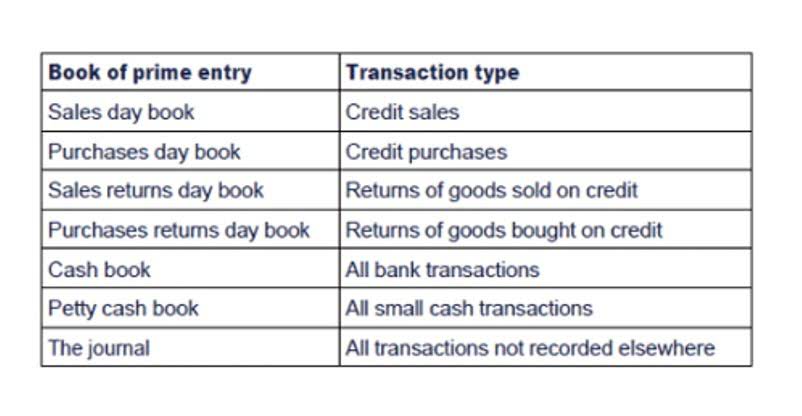
Income statement account that records expenses or gains from activities that are not part of the main purpose of the company, such https://gleeministries.org/percentage-of-sales-method-definition-and-how-to/ as gains realized from financial investments by a manufacturing company. For each house bank account, a G/L account is required, to which payment transactions are posted. With the cash account the number of such G/L accounts can be significantly reduced. A general ledger takes information from the journal and categorizes it into the appropriate accounts. Each entry may also include subaccounts to provide further transaction details. To get started, create a journal and record each business transaction as it occurs.
Examples of a general ledger
- This template is ideal for accounting team members who need a comprehensive record of all financial transactions.
- For a step-by-step introduction, see our (relatively painless) guide to double-entry accounting.
- Instead of a blur of numbers, the ledger organizes everything in a way that’s easy to understand, making it simple to identify trends, spot any issues, and make smarter decisions.
- By this same analogy, a ledger could be considered a folder that contains all of the notebooks or accounts in the chart of accounts.
- This template gives you everything you need to set up a simple, single-entry accounting system for your business.
What worked well in the past might not serve the business needs of the future. With its focus on reporting what happened (past transactions), some of the information in a general ledger might already be out of date, or it might not sufficiently reflect significant recent developments. For these reasons, this limitation of a general ledger could hinder an organization’s agility or its ability to course correct or proactively take advantage of an opportunity before the month- or quarter-end. As businesses attempt to keep pace with the speed of change, the general ledger is of limited use when providing forward-looking insight and business strategies. For many people, the idea of a general ledger might conjure up images of visor-wearing accountants wielding quill-and-ink pens, scribbling numbers and notes in large, dusty parchment books. While many fundamentals of the general ledger remain intact more than 500 years after it was established as a cornerstone of modern accounting, technology has moved it light-years into the future.
The following example shows an accounting system transaction within a general ledger for a fictional account, ABCDEFGH Software. While the above accounts appear in every general ledger, other accounts can be used to track special categories, perform useful calculations and summarize groups of accounts. The general ledger is used differently depending on the account in question, but the balance sheet is the best-known use of it, so we’ll start with that as an example. Every transaction has a story, so take a few extra seconds to add a clear description for each one. Write out what the transaction was for, like payment from client x or office supplies purchase.

Some disadvantages of a general ledger include the cost and amount of time it takes to set up. Additionally, if you make errors in updating or recording transactions, the GL account balances will be incorrect. A journal entry is a sequential list of accounting entries recording transactions while a GL is a formalized account system where recorded transactions in a journal are posted.
You need to check the transaction amounts recorded as part of your general ledger. If you are preparing your general ledger manually, you will have to keep your source documents handy. These sources will help to verify that the amounts recorded in the ledger accounts are accurate.